One of the most common questions I receive from concert players and collectors is simply: “What is the best classical guitar?” The scientific truth is that the absolute “best” guitar does not exist in a vacuum. A master-built instrument is an acoustic mirror. The perfect guitar is the one that achieves mechanical and resonant symbiosis with your unique physiology, your right-hand technique, and your musical intent. Choosing an instrument is not about finding the loudest box; it is about finding the perfect transducer for your body.
Biomechanics and the Fulcrum: The Neck Profile
We must first address ergonomics. A guitar is a physical extension of the player, and the neck is the primary interface. The choice between a “D-shape” and a “C-shape” profile is not merely an aesthetic preference; it is a matter of biomechanics. A traditional D-shape provides a flatter, wider resting area for the thumb. This creates a highly stable fulcrum, optimizing leverage for complex barré chords and maintaining the classical left-hand posture.
Conversely, a C-shape profile follows the natural palmar arch of the hand. For players with smaller hands, or those who incorporate modern fingering techniques, the C-profile can significantly reduce tendon fatigue during extended performances. When I carve a neck at Kairòs Lutherie, I shape it precisely to distribute the muscular tension of the player’s specific hand geometry.
The Physics of Scale Length and String Tension
Another critical factor is the scale length (diapason). While the standard 650mm scale is universally accepted, a 640mm or 630mm scale is increasingly requested. It is a misconception that shorter scales are only for small hands. According to Mersenne’s laws of acoustics, shortening the scale reduces the required string tension to achieve standard pitch. This results in a softer, more pliable feel under the right hand. If you play with a lighter, flesh-heavy touch, a shorter scale can provide greater expressiveness and warmth, while a 650mm scale offers the resistance necessary for a highly aggressive, purely nail-driven attack.
The Acoustic Engine: Matching Wood to Attack
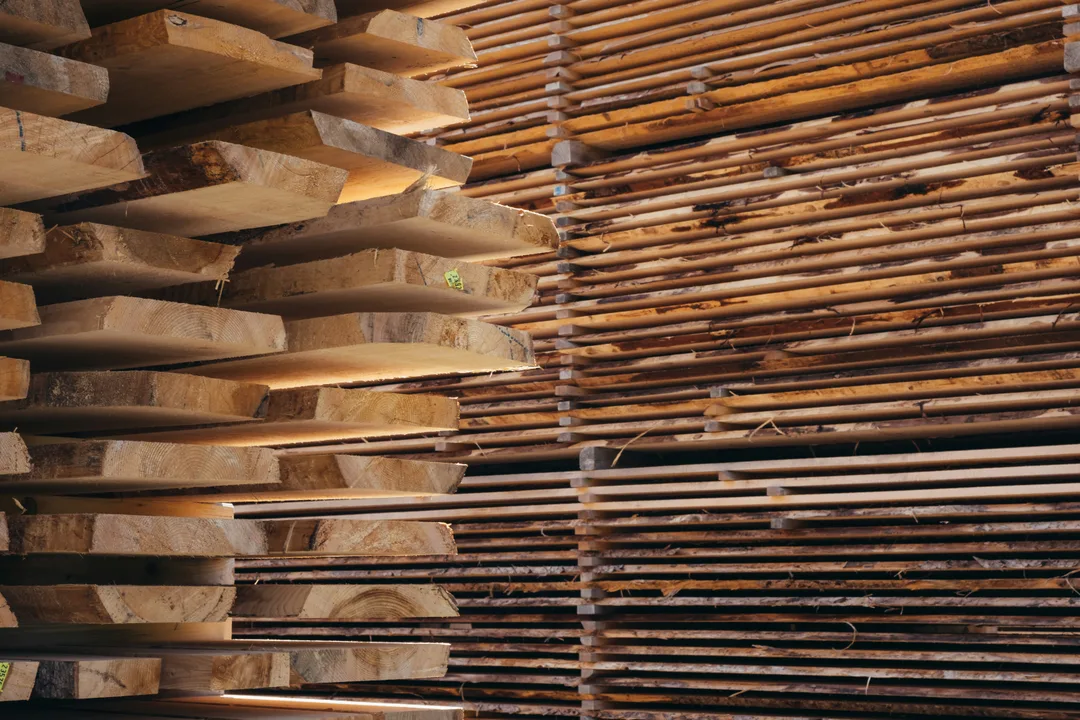
Once the ergonomics are resolved, we must align the soundboard material with your sonic identity. The soundboard reacts to the kinetic energy of your right hand. Cedar (Thuja plicata) has a lower density and lower stiffness, meaning it requires very little energy to vibrate. It offers an immediate transient response and a dark, enveloping warmth: perfect for players who seek an intimate, highly responsive instrument.
Alpine Spruce (Picea abies), which I favor for my concert models, is a different beast entirely. It boasts a higher stiffness-to-weight ratio. It requires a more deliberate, powerful right hand to fully drive the top, but in return, it offers unparalleled “headroom.” A spruce top can be pushed to extreme dynamic volumes without the sound breaking up or muddying. Furthermore, Spruce acts as a prism for tone color: depending on the angle of your attack, you can extract an infinite spectrum of timbres, from crystalline trebles to cello-like basses.
The Dialogue
Ultimately, buying a concert guitar should never be a blind transaction. It should be an organological dialogue. Before discussing rosettes or aesthetics, a luthier must understand the geometry of your hands, the velocity of your stroke, and the voice you hear in your head. Only through this scientific and empathetic synthesis can we craft an instrument that truly disappears when you play, leaving nothing but the music.