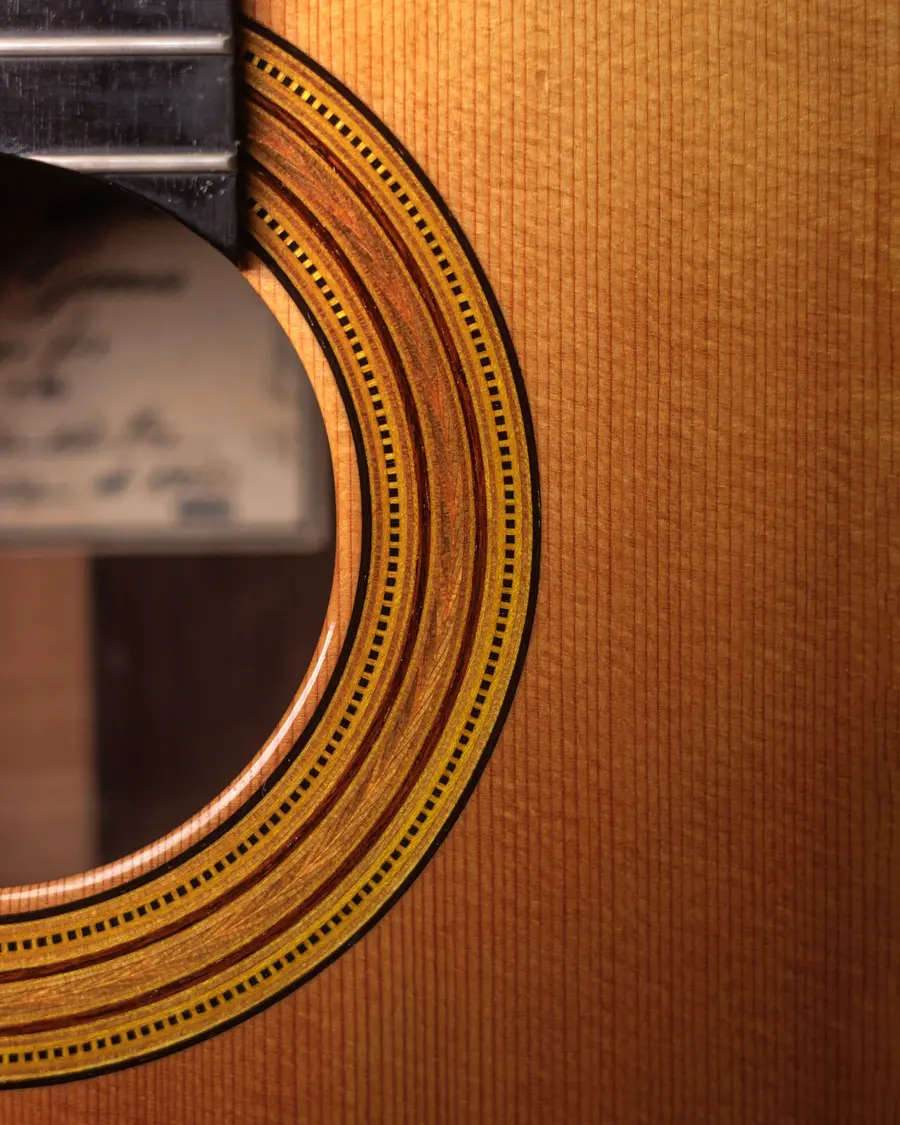
A classical guitar is an ecosystem defined by constant, aggressive conflict. Approximately 40 kilograms of string tension actively attempt to fold the instrument in half, opposed by a fragile wooden architecture trying to resist. The commercial industry views this tension as a liability, overbuilding soundboards and standardizing bracing templates to ensure structural immortality and eliminate warranty claims. I view this absolute safety as acoustic death. True lutherie operates precisely at the edge of collapse. By manually tap-tuning and surgically shaving micro-grams of material from the internal bracing, I push the anisotropic limits of the Spruce and Cedar tops to the absolute brink of failure. It is only at this perilous threshold, where the wood is yielding but not breaking, that the instrument truly becomes a hyper-responsive, living transducer.
However, to build a soundboard to this extreme edge of structural collapse, the surrounding architecture must be absolutely immune to failure. This is where nostalgic tradition often fails the modern concert player. I refuse to rely only on historical, water-based hide glues in critical mechanical nodes. Instead, I unabashedly utilize 100% solid, zero-shrinkage epoxy resins and carbon fiber composites. By transforming the neck joint and regional woods, such as the custom Larch laminates used in my ‘Pandora’ model, into indestructible mechanical monoliths, I isolate the kinetic energy entirely within the soundboard. Modern polymer engineering does not replace the organic nature of the wood; rather, it provides the uncompromising structural anchor required to let the top freely dance on the verge of implosion.
Furthermore, this edge of collapse is not a universal mathematical constant; it is a fluid mechanical threshold that must be manipulated for the individual player. When I design a bespoke instrument, I am engineering the precise angle of attack against the soundboard’s resistance. By implementing a custom 640mm scale length, we instantly alter the kinetic energy and significantly reduce tendon fatigue for the player during highly technical repertoire. To compensate for this reduced tension and still drive the top to its critical threshold, I utilize a 12-hole tie block bridge. This creates a steeper string break angle over the saddle, physically forcing the soundboard back to that dangerous, hyper-responsive edge.
Ultimately, building to the edge of collapse is not merely a structural choice, but a philosophical one. It requires stripping away dogmatic assumptions and approaching the material with rigorous empirical analysis. The result is an instrument that exists in a state of suspended animation, alpine in its physical substance, yet fiercely critical and Mediterranean in its architectural soul.