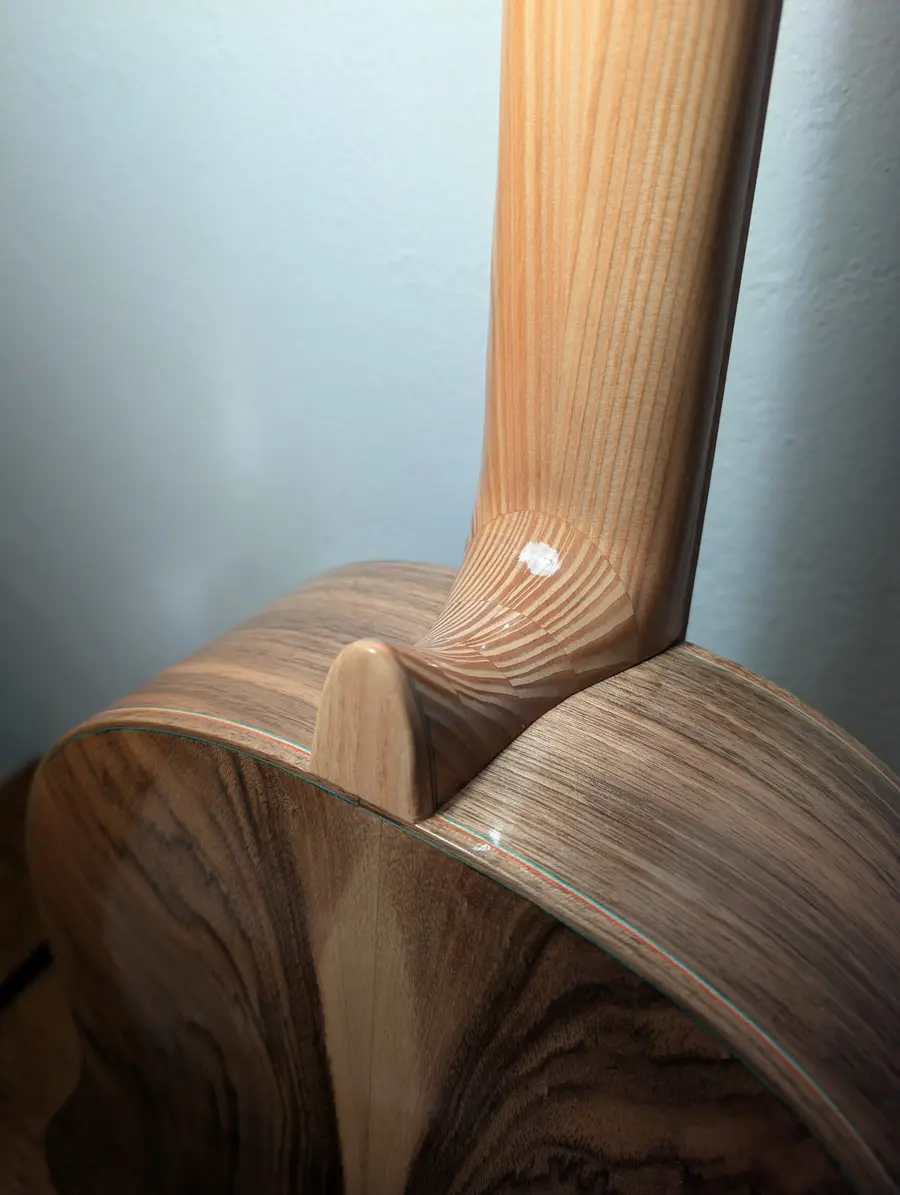
The final voice of a classical guitar is determined not just by how it is built, but by how it is finished. In the modern industry, spray lacquers like polyurethane or nitrocellulose are the standard. They are fast, durable, and cost-effective. However, they enclose the instrument in a rigid plastic shell, significantly dampening the soundboard’s ability to vibrate freely.
At Kairòs Lutherie, I finish my concert guitars using the traditional French Polish method. It is an incredibly demanding technique, but acoustically, it is without equal.
The Acoustic Advantage
French Polish is essentially shellac dissolved in alcohol, applied by hand using a muneca (a cloth pad). Because it goes on in microscopically thin veils, the final finish is only a fraction of a millimeter thick. This minimal mass ensures the Val di Fiemme spruce soundboard retains its full dynamic range, responsiveness, and volume. The wood is protected, yet completely free to move.
The Price of Patience
The primary difficulty of French polishing is the sheer time and skill required. It cannot be rushed. It involves weeks of rhythmic, circular rubbing, building the finish one invisible layer at a time, allowing it to cure, and carefully leveling it with alcohol and a drop of oil. It requires intense concentration and is highly sensitive to the ambient temperature and humidity of the workshop.
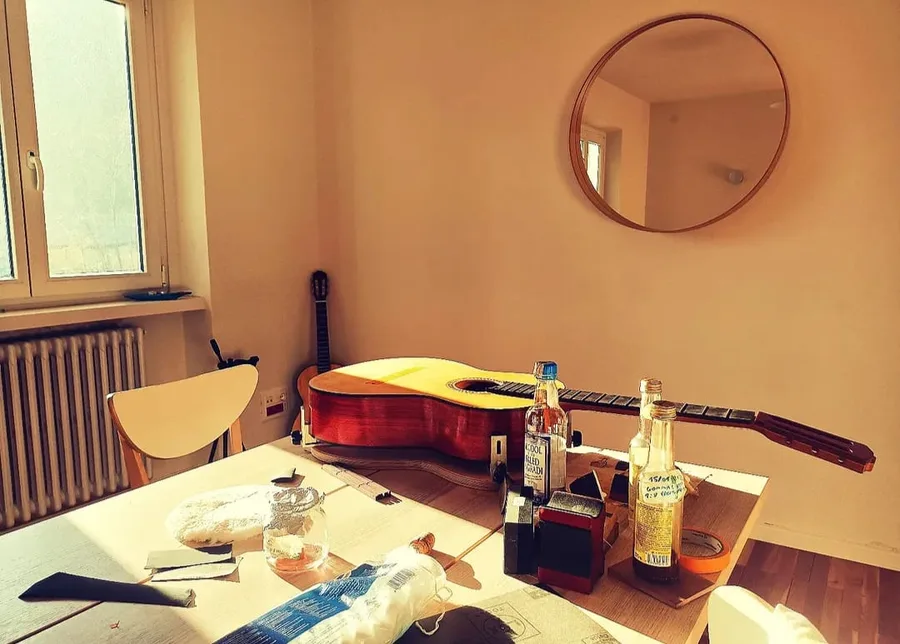
The Kairòs Recipe: Beyond Pure Shellac
While pure shellac is excellent, it can sometimes be brittle. I have refined my own spirit varnish recipe to maximize both acoustic transparency and durability. Rather than relying on shellac flakes alone, I mix them with a precise blend of natural resins:
- Benzoin: Helps the finish flow smoothly from the pad and imparts a stunning, high-gloss luster, along with a sweet scent during application.
- Elemi: Acts as a natural plasticizer. It adds essential flexibility, ensuring the finish can stretch and move with the wood’s natural expansion and vibration without cracking.
- Sandarac: Significantly increases the hardness and brilliance of the finish, offering better protection against the guitarist’s fingernails and daily wear.
- Manila Copal: A hard resin that further enhances durability and depth, giving the polish a rich, glass-like quality.
This bespoke blend transforms a simple shellac finish into a complex, resilient, and acoustically invisible skin. It is a slow, laborious process, but when you hear the guitar sing with unhindered power, every hour spent at the bench is worth it.